Product Overview
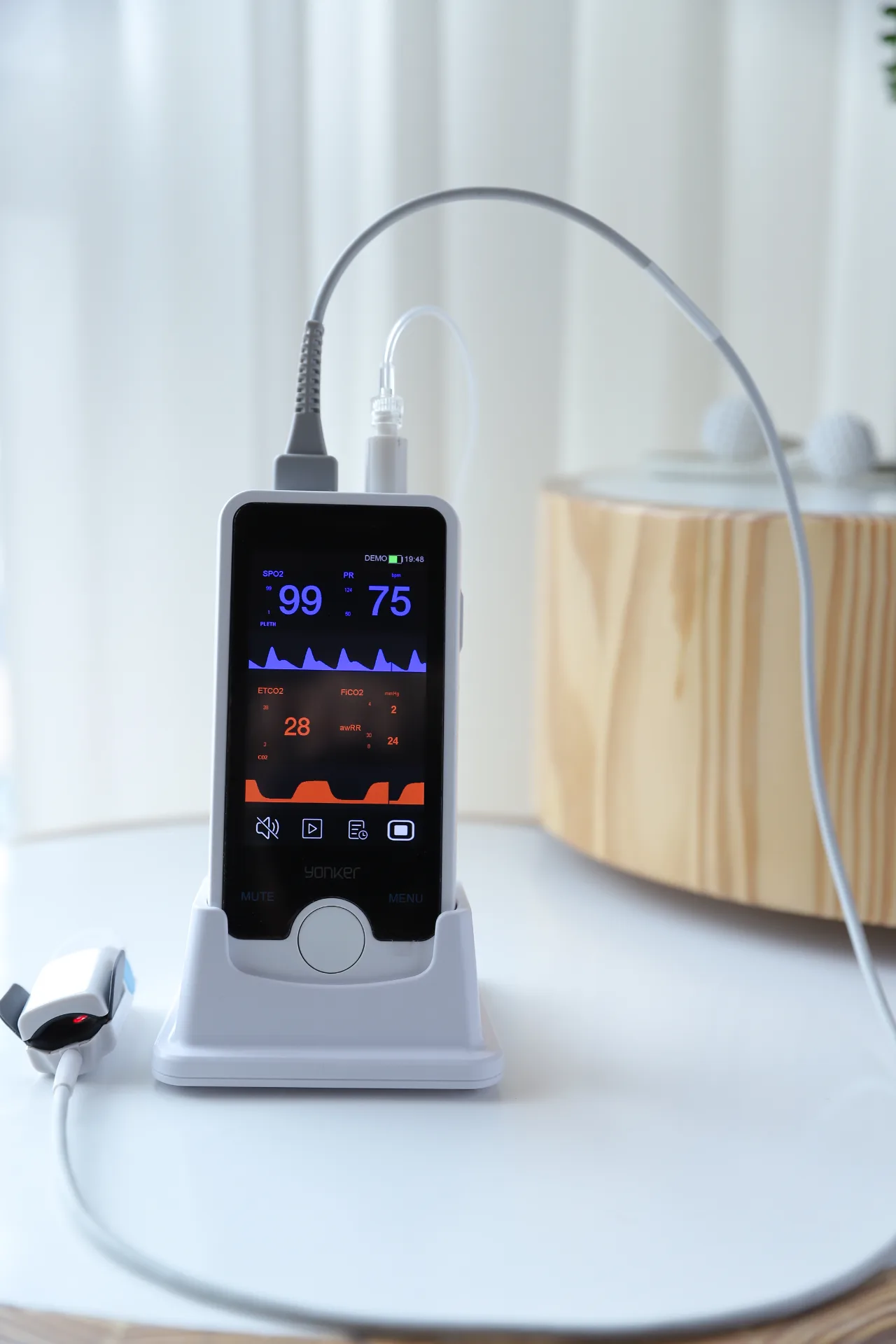
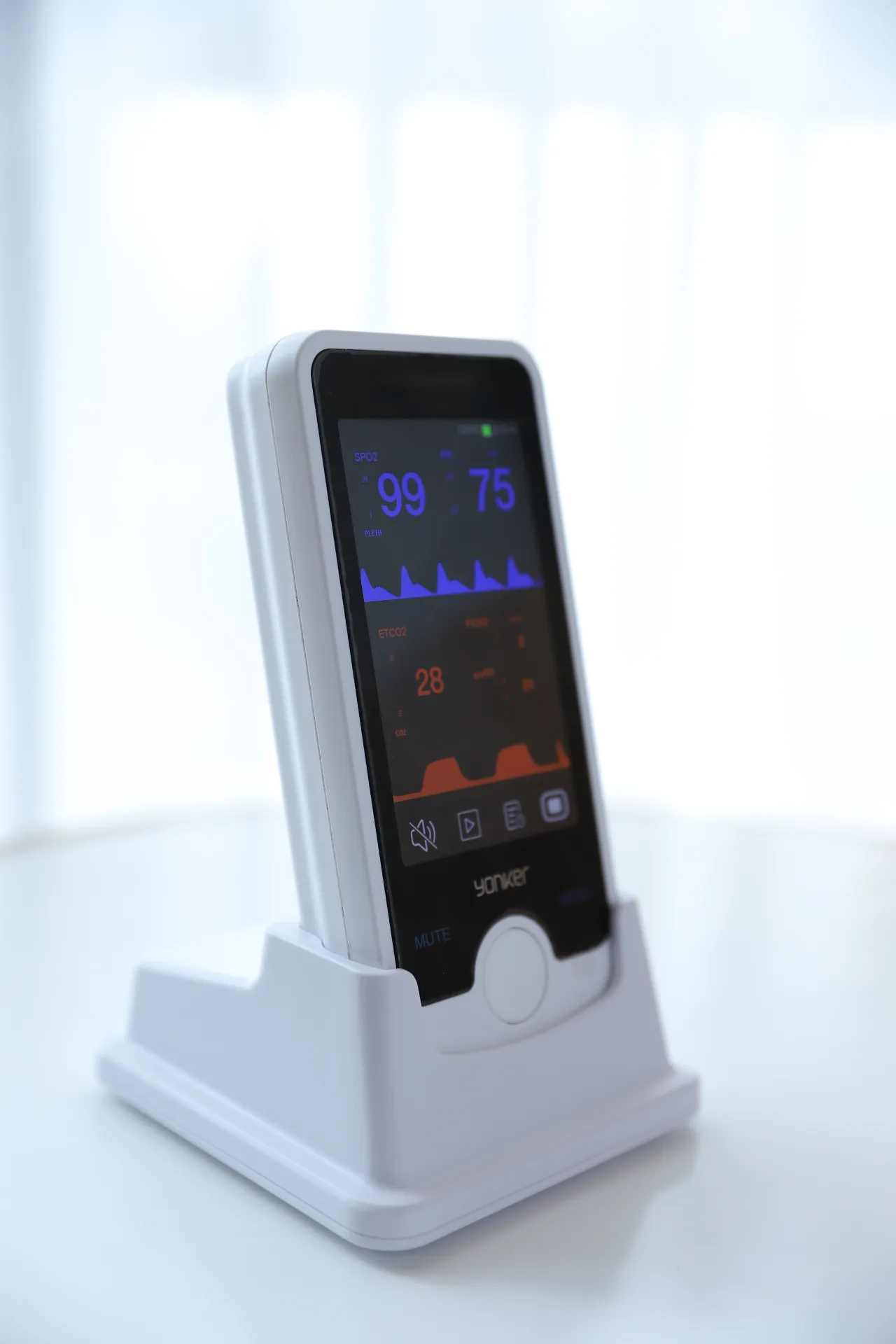
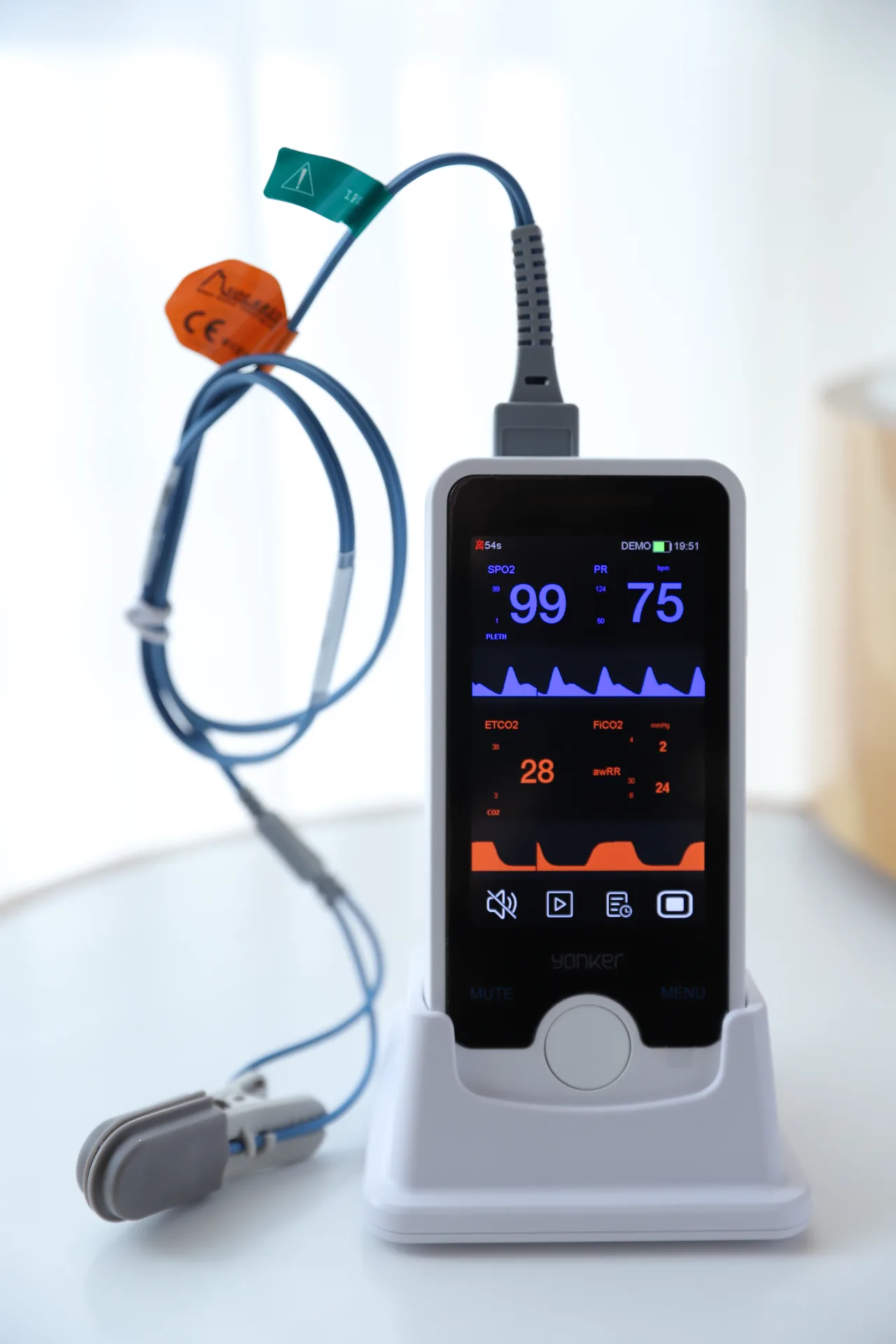
The E4 is a compact vital signs monitor designed for spot-check monitoring in home healthcare, clinical triage, and point-of-care settings. This portable vital signs monitor simultaneously measures blood oxygen saturation (SpO2), non-invasive blood pressure (NIBP), and pulse rate, with optional end-tidal CO2 (EtCO2) capnography for respiratory monitoring. Featuring a 7-inch color LCD display with real-time waveform visualization, the E4 supports both adult and pediatric patients, making it versatile for family medicine clinics, community healthcare stations, and home health monitoring programs. The device stores up to 20 hours of continuous measurement data with 1-minute minimum resolution, enabling clinicians to review patient trends over extended monitoring periods. With multi-language support, sound and visual alarm indicators, and a built-in rechargeable lithium-ion battery, the E4 delivers clinical-grade vital signs measurement in a lightweight, portable form factor weighing only 950 grams.
Key Features & Advantages
- Compact 7-inch color LCD display: Real-time display of numerical values and waveforms with fashionable, refined appearance suitable for both clinical and home environments.
- Triple vital signs measurement: Simultaneously monitors SpO2 (0-100%), NIBP (oscillometric method), and pulse rate (30-240 bpm), with optional EtCO2 module for capnography.
- Portable and lightweight: Weighing only 950g with dimensions of 246.5 x 146.4 x 50.7 mm, the E4 is ideal for ward rounds, patient transfers, and home health visits.
- 20-hour data storage: Continuous measurement storage for up to 20 hours with 1-minute minimum resolution, supporting trend analysis and clinical documentation.
- Multi-language support: Interface available in multiple languages for international clinical use.
- Sound, text, and visual alarms: Three-tier alarm system ensures patient safety alerts are immediately noticeable in busy clinical environments.
- Built-in rechargeable battery: Internal 7.4V lithium-ion battery (2000 mAh) enables cordless operation for mobile monitoring scenarios.
Technical Specifications
- Display: 7-inch color LCD
- Patient types: Adult, Child
- SpO2: Measurement range 0-100%; resolution 1%; accuracy: 70-100% plus or minus 4%
- Pulse rate: Range 30-240 bpm; resolution 1 bpm; accuracy plus or minus 3 bpm; update cycle 1s
- NIBP: Oscillometric method; adult systolic 40-270mmHg, diastolic 10-210mmHg, mean 20-230mmHg; static pressure range 0-300mmHg; accuracy: max mean error 5mmHg, max standard deviation 8mmHg
- Overpressure protection: Adult 300mmHg, Child 240mmHg, Neonatal 150mmHg
- EtCO2 (optional): Available as optional module for end-tidal CO2 monitoring
- Data storage: Up to 20 hours continuous, minimum resolution 1 minute
- Power: AC 100-240V, 50/60Hz; internal 7.4V 2000mAh lithium-ion battery
- Dimensions: 246.5 x 146.4 x 50.7 mm; weight: 950g
- Operating environment: Temperature 5-40 degrees C; humidity 15-80%; pressure 86.0-106.0 kPa
- Standard accessories: Power cable, operator's manual, NIBP cuff (optional), EtCO2 accessories (optional)
Comparison & Competitive Advantages
Unlike full-size multiparameter patient monitors that are bulky and expensive, the E4 vital signs monitor provides essential monitoring parameters (SpO2, NIBP, pulse rate) in a compact, portable form factor at a fraction of the cost. Compared to fingertip pulse oximeters that only measure SpO2, the E4 adds NIBP measurement and optional EtCO2, making it suitable for more comprehensive clinical assessments. The 20-hour data storage capacity distinguishes it from basic spot-check monitors that lack trend recording. At 950g, it is significantly lighter than traditional bedside monitors, making it ideal for mobile healthcare workflows including home visits, ambulance services, and community health screening programs.
Applications
The E4 vital signs monitor is designed for home healthcare monitoring, community healthcare stations, clinical triage, outpatient clinics, ambulance and emergency medical services, telemedicine programs, occupational health screening, and personal health monitoring. It is particularly suited for environments where portability, ease of use, and essential vital signs measurement are prioritized over full multiparameter monitoring. The optional EtCO2 module extends its utility to respiratory care and anesthesia recovery monitoring scenarios.
Frequently Asked Questions
Q: What is the E4 vital signs monitor used for?
A: The E4 is a portable vital signs monitor used for measuring blood oxygen saturation (SpO2), non-invasive blood pressure (NIBP), and pulse rate. It is suitable for home healthcare, clinical triage, community health screening, and point-of-care monitoring where compact, mobile vital signs measurement is needed.
Q: Can the E4 vital signs monitor be used at home?
A: Yes, the E4 is specifically designed for both home users and professional clinical staff. Its compact size (246.5 x 146.4 x 50.7 mm), lightweight (950g), and multi-language support make it suitable for home health monitoring programs. The intuitive interface allows non-specialist users to operate the device with minimal training.
Q: Does the E4 support EtCO2 monitoring?
A: EtCO2 (end-tidal CO2 capnography) is available as an optional module. When configured, the E4 can monitor respiratory CO2 levels in addition to SpO2, NIBP, and pulse rate, extending its application to anesthesia recovery and respiratory care monitoring.
Q: How long can the E4 store measurement data?
A: The E4 supports continuous measurement data storage for up to 20 hours with a minimum resolution of 1 minute. This allows clinicians to review patient vital signs trends over extended monitoring periods without manual recording.
Q: What is the difference between the E4 and a full multiparameter patient monitor?
A: The E4 focuses on essential vital signs (SpO2, NIBP, pulse rate) with optional EtCO2, while a full multiparameter monitor includes additional parameters such as ECG, respiration rate, body temperature, and ST segment analysis. The E4 is designed for portability and ease of use in spot-check and home monitoring scenarios, whereas multiparameter monitors are intended for continuous bedside monitoring in ICU, OR, and CCU environments.
← Back to all products