Industry commentary — August 2026
In the landmark 1980 survey published by the Association of periOperative Registered Nurses (AORN), patient positioning was identified as the fourth most frequent cause of operating-room safety incidents. Five decades later, positioning-related harm — pressure injuries, peripheral nerve compression, compartment syndrome, and postoperative visual loss — still appears on every published OR-harm registry.
What changed is the language. Position-induced harm is now understood as the predictable mechanical consequence of three variables: interface pressure, shear, and duration. When the contact pressure between the body and the table exceeds the capillary perfusion threshold of roughly 4.67 kPa, tissue ischemia begins. Double that pressure and the safe window collapses from four hours to roughly two.
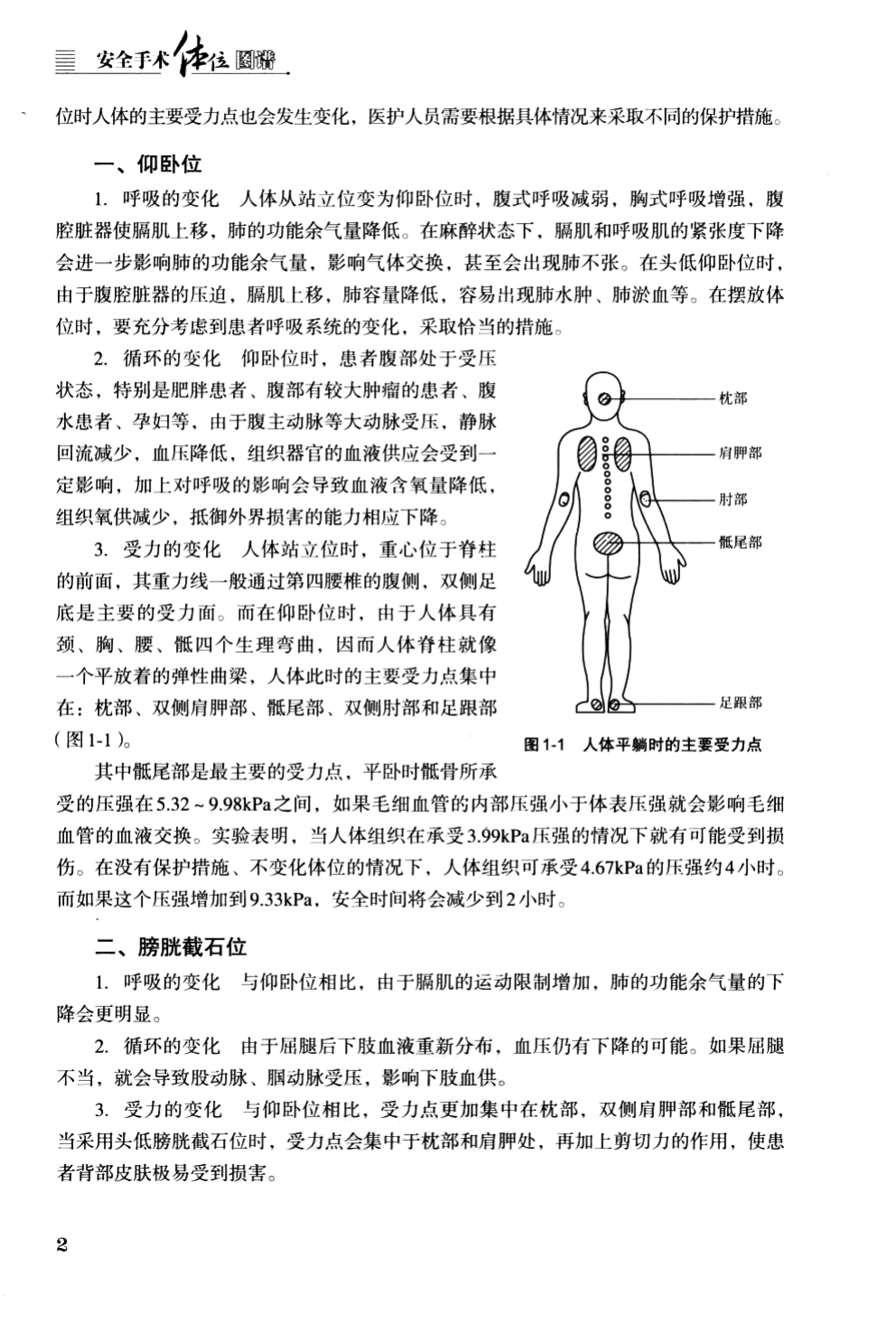
Pressure-point map of the supine patient: occiput, scapulae, elbows, sacrum, heels.
The anatomy of pressure points
A supine patient's principal loading points are the occiput, scapulae, elbows, sacrum, and heels. Move the patient laterally and the load rotates to the ear, shoulder, iliac crest, greater trochanter, knee, and lateral malleolus. In prone, the forehead, eyes, chin, acromion, breasts, iliac crests, patellae, and toes take the load. Every position has its own pressure map; every pressure map has its own injury signature.
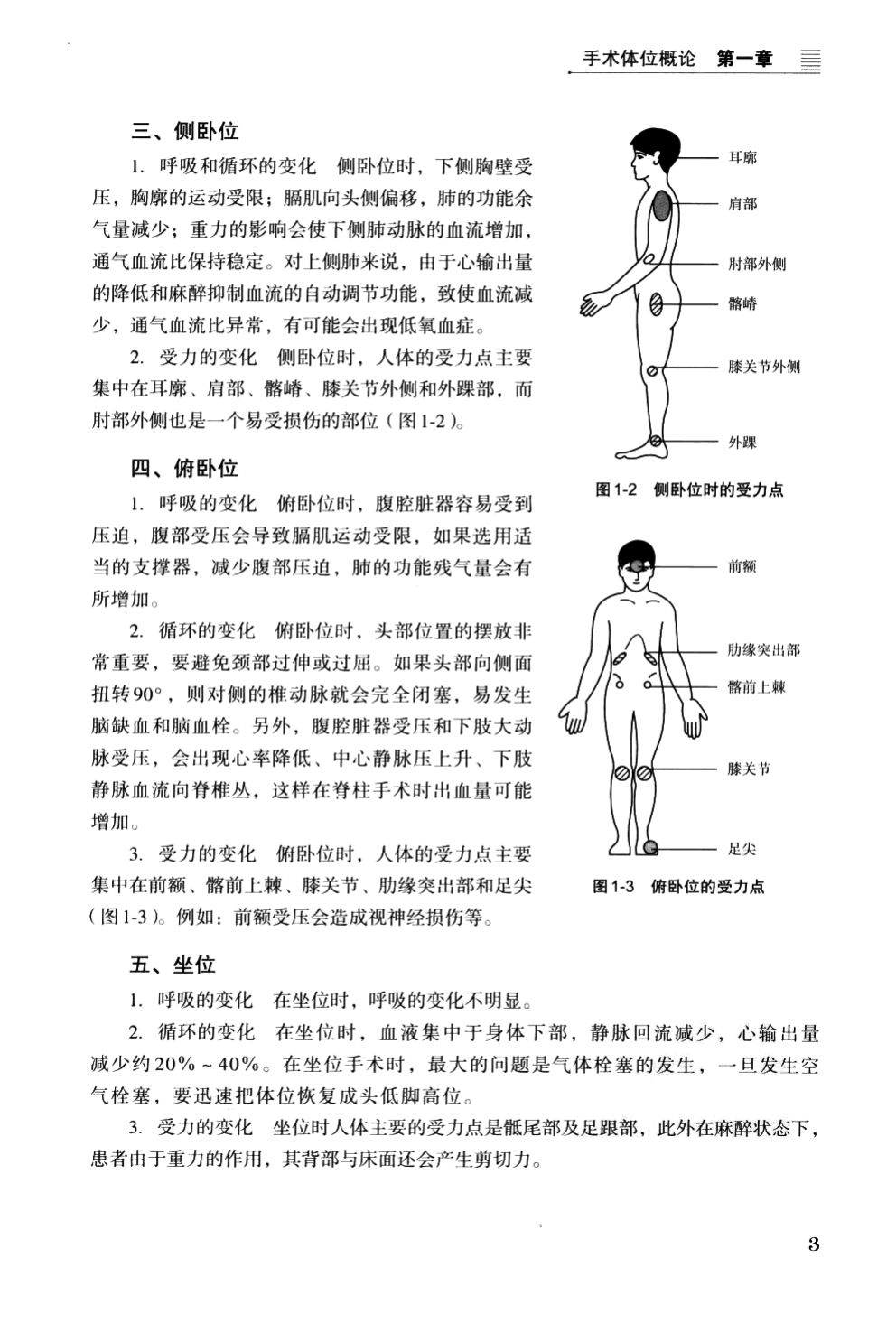
Pressure-point maps of the lateral and prone patient.
Shear — the silent contributor
Shear is the parallel sliding force generated when the patient slides against the table while gravity keeps the deeper tissue stationary. It is the dominant mechanism behind many sacral and ischial pressure injuries, especially during position transitions or Trendelenburg phases. General anesthesia suppresses protective muscular tone and vasomotor reflexes, which is why even moderate pressures sustained over a long case can injure an anesthetized patient in ways an awake volunteer would never experience.
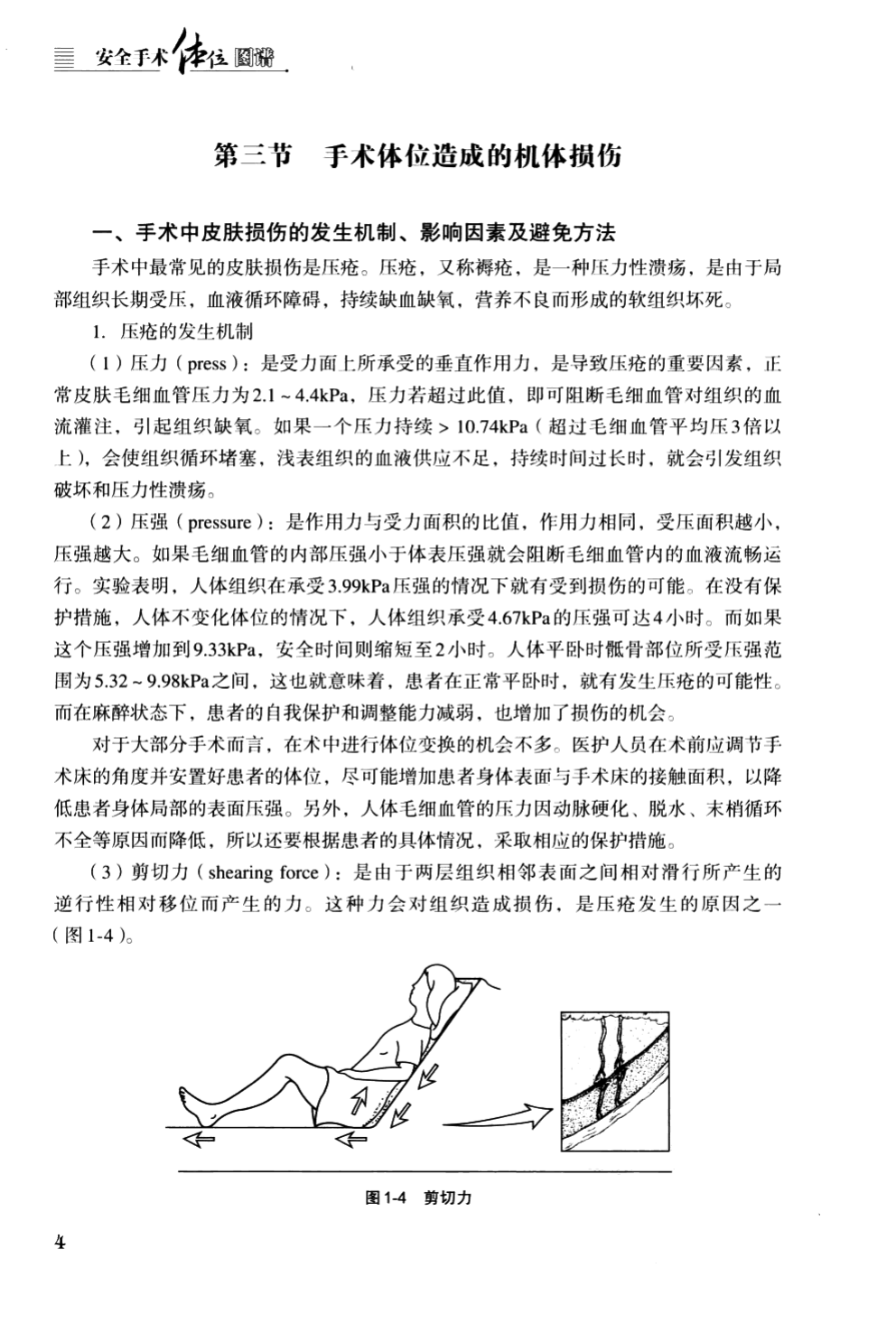
Schematic of shearing force at the bone-soft-tissue interface during table articulation.
Five principles every OR team shares
- Maintain physiological alignment of the head, spine, and limbs.
- Distribute pressure across the largest possible contact area.
- Pad every bony prominence with material whose interface pressure stays below capillary closing pressure.
- Secure — but do not compress — limbs, tubes, and lines.
- Re-check the position every time the table is articulated or repositioned.
Modern pressure-relief overlays — gel-based or viscoelastic memory foam — are designed to keep peak interface pressure below the 4.67 kPa threshold across the most common contact points, and gel limb fixation straps provide system-wide coverage that complements the table's own articulation.
FAQ
How long can a patient safely remain in one position? The published thresholds are guidelines, not guarantees: roughly 4 hours at 4.67 kPa and 2 hours at 9.33 kPa, with significant individual variability based on age, BMI, perfusion status, and comorbidities.
For more information about Red Sun Medizone surgical positioning systems and other operating-room equipment, please visit www.redsunmedizone.com or contact our sales team.
About Red Sun Medizone: Red Sun Medizone (Tianjin Huahong Technology Co., Ltd.) is a medical device manufacturer and exporter specializing in operating tables, surgical position pads, surgical lights, patient monitors, and in-vitro diagnostics. With CE, ISO 13485, and FDA certifications, the company serves healthcare facilities in over 60 countries worldwide.