Product Overview
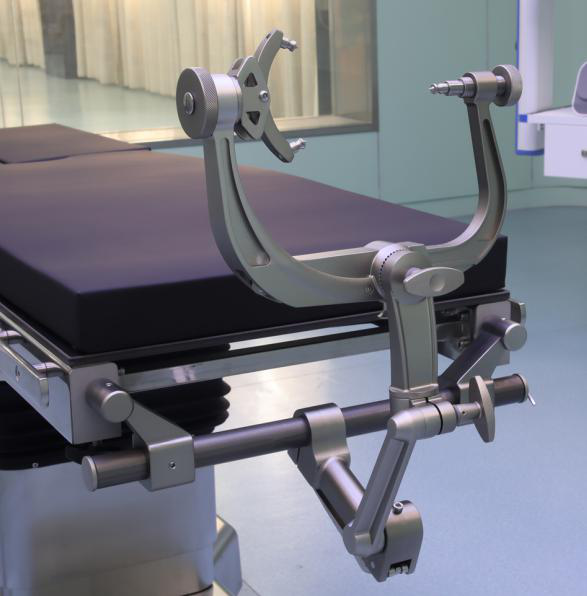
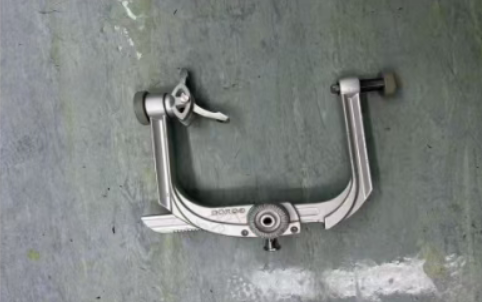
The Three-Point Skull Clamp System for Neurosurgery is a professional Class I neurosurgical head fixation device engineered to deliver rigid, stable and repeatable skull immobilization during cranial and brain surgery. As a core operating-table accessory used in craniotomy, brain tumor resection, aneurysm clipping, deep brain stimulation, stereotactic procedures and other neurosurgical interventions, this cranial stabilization system provides the multi-directional adjustability and micro-movement-free platform that modern microsurgery and image-guided neurosurgery demand.
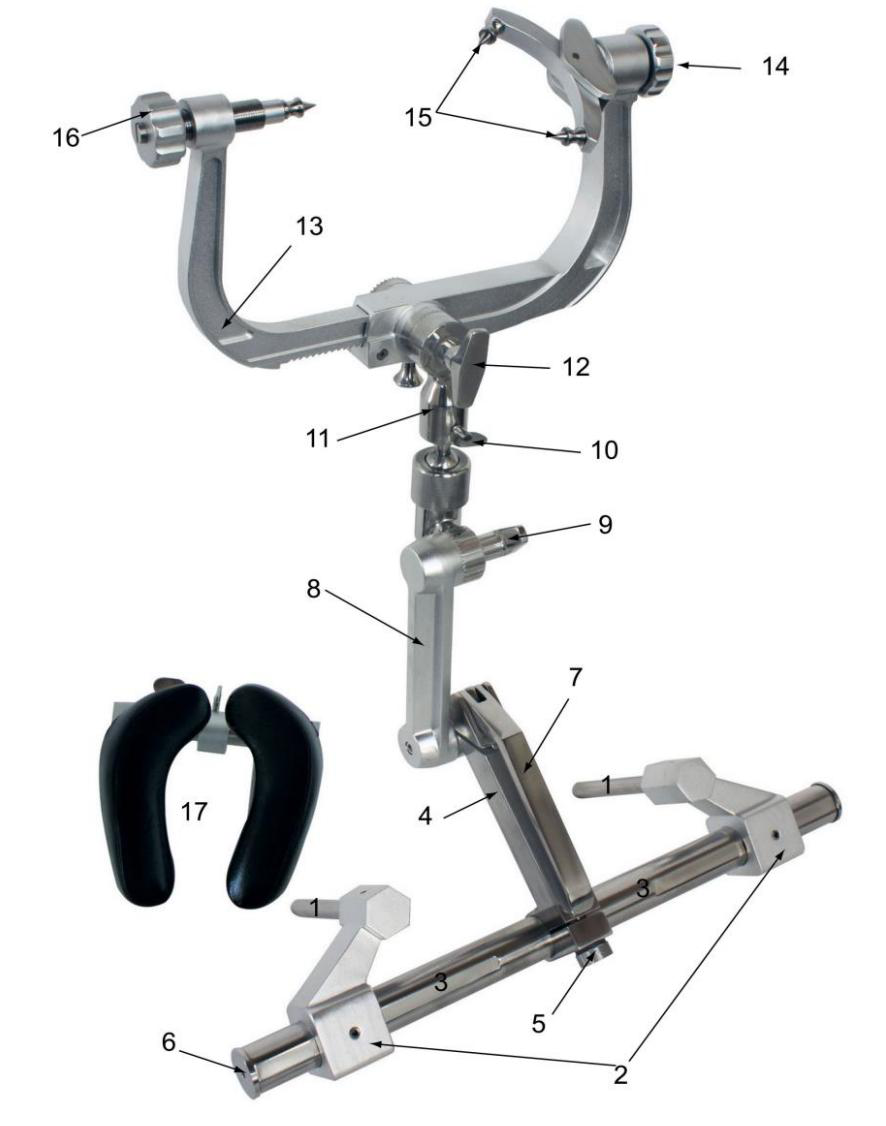
Manufactured by Red Sun Medizone under an ISO 13485 quality management system and CE marked for international markets, the Three-Point Skull Clamp System combines a high-strength aluminum-alloy support arm, a ball-pivot swivel adaptor, a 360 N / 80 lb torque screw with calibrated pressure indicator, a quick-release skull clamp with three adult and three pediatric skull pins, and a horseshoe-shaped silicone-padded headrest. The result is a universal head-frame solution that is compatible with the side-rails of all major operating-table brands, fits patients from pediatric to adult, and supports the full range of neurosurgical positions — prone, supine, lateral and sitting.
Key Features & Technical Highlights
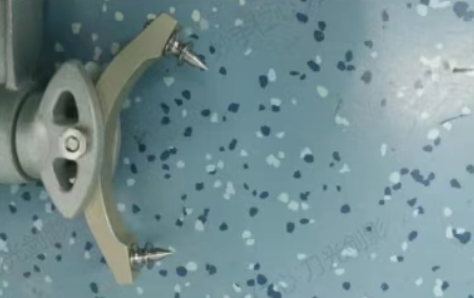
- Three-Point Rigid Skull Fixation: Three skull pins are distributed in an isosceles triangle around the head, applying synchronized compression through a single torque screw to achieve rigid, micro-movement-free cranial immobilization. The integrated pressure indicator provides the surgeon with a precise, real-time readout of the clamping force.
- Ball-Pivot Swivel Adaptor: A precision ball-pivot joint at the adaptor provides 360° pan rotation and generous tilt range, enabling fine intra-operative repositioning of the head without re-tightening the skull pins and without compromising fixation stability.
- Multi-Directional Adjustment: Forward / backward travel of 350 mm, lateral (sinistrodextral) swing of 400 mm, vertical lift of 350 mm and rotational tilt ≥ 75° give the surgical team complete freedom to position the head for any cranial approach.
- Quick-Release Skull Clamp with Ratchet Lock: The skull-clamp head accepts three adult or three pediatric pins, locks with a single ratchet handle, and the rocker-arm locking knob provides positive tactile feedback so the surgeon knows fixation is secure.
- Adjustable Base with Replaceable Insertion Pins: Both base insertion pins are slidable, giving a center-to-center installation range of 190–590 mm. The base is therefore directly compatible with the side-rail hole patterns of all major operating-table brands.
- Pressure-Controlled, Surgeon-Set Torque: Recommended clamping pressure is 60 lb (≈ 270 N) for adults and 40 lb (≈ 180 N) for pediatric patients. Maximum pressure must never exceed 80 lb (≈ 360 N). The pressure indicator provides a direct, calibrated reading.
- Horseshoe-Shaped Silicone Headrest: A soft, smooth silicone-padded horseshoe headrest is included for supine, lateral and semi-sitting cases, reducing the risk of pressure-point injury and occipital alopecia during long procedures.
- Aluminum-Alloy, Autoclavable Construction: The support arm, adaptor, base unit and skull clamp are manufactured from medical-grade aluminum alloy with surface-hardening treatment. All load-bearing clinical components are autoclavable except the head-frame base that mounts to the table.
- Lightweight, Compact, Single-Operator Design: Net weight is only 5.5 kg. The compact footprint increases working space around the head, reduces surgeon fatigue and allows a single circulating nurse to install and adjust the system.
Technical Specifications
ParameterSpecification Product NameThree-Point Skull Clamp System for Neurosurgery Device ClassificationClass I, non-invasive, reusable surgical instrument Skull Pins Supplied3 adult pins + 3 pediatric pins (sterile, single-patient use) Torque Screw360 N / 80 lb torque screw with calibrated pressure indicator Adaptor TypeBall-pivot / swivel adaptor, 360° pan Adaptor Angles0° / 90° selectable Forward / Backward Adjustment350 mm Lateral (Sinistrodextral) Swing400 mm Vertical Adjustment350 mm Rotational Tilt≥ 75° Base Installation Range (center-to-center)190 – 590 mm Clamp LockQuick-release ratchet lock with rocker-arm knob Material — Support ArmAluminum alloy Material — Base Handle & Connecting TubeAluminum alloy, surface-hardening treated Material — Skull Clamp & PinsMedical-grade stainless steel / aluminum alloy HeadrestHorseshoe-shaped, silicone-padded, autoclavable Net Weight5.5 kg Gross Weight12 kg Patient Positions SupportedProne, supine, lateral, semi-sitting, sitting Sterilization MethodAutoclave (skull pins, skull clamp, C-shaped bracket); surface disinfection (base unit) Quality / RegulatoryISO 13485 quality system, CE markedSystem Components
- 1 × Three-Pin Skull Clamp with ratchet handle and rocker-arm locking knob
- 1 × Ball-pivot swivel adaptor (0° / 90°)
- 1 × Aluminum-alloy support arm with adjustable crank and lock
- 1 × Universal regulator with locking screw
- 1 × Base unit with two sliding insertion pins (190–590 mm range)
- 3 × Adult skull pins (sterile, single-patient use)
- 3 × Pediatric skull pins (sterile, single-patient use)
- 1 × Horseshoe-shaped silicone-padded headrest
- 1 × Special installation wrench
Clinical Applications
The Three-Point Skull Clamp System is indicated for any neurosurgical, cranial or maxillofacial procedure that requires rigid, stable and adjustable immobilization of the patient's head. Typical clinical applications include:
- Craniotomy for brain tumor resection (supratentorial and infratentorial)
- Cerebral aneurysm clipping and other open vascular neurosurgery
- Deep brain stimulation (DBS) electrode implantation
- Stereotactic biopsy, stereotactic radiosurgery and frame-based navigation
- Posterior fossa surgery (prone, sitting, park-bench positions)
- Skull-base surgery and acoustic neuroma resection
- Trauma craniotomy for hematoma evacuation
- Pediatric neurosurgery (using pediatric pins at 40 lb pressure)
- ENT and maxillofacial procedures requiring cranial support
- Image-guided and intra-operative imaging-assisted neurosurgery
Compatible Operating Tables & Surgical Positions
The base unit's two sliding insertion pins cover a center-to-center installation range of 190 mm to 590 mm. This wide range, combined with the quick-release clamp, makes the Three-Point Skull Clamp System directly compatible with the side-rail coupling patterns of all major operating-table brands, including the major Chinese, European and U.S. table manufacturers commonly used in tertiary hospitals and neurosurgical centers.
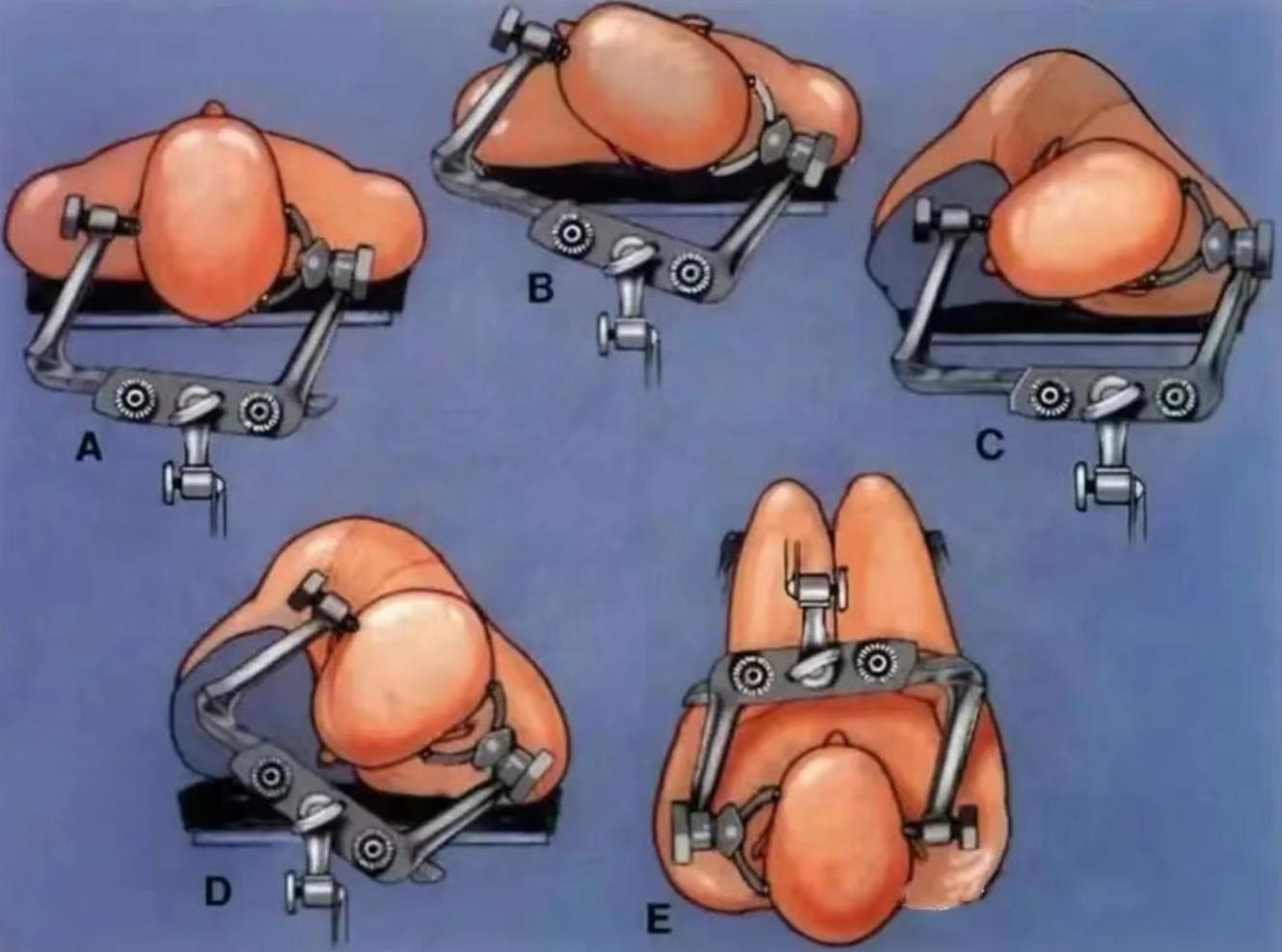
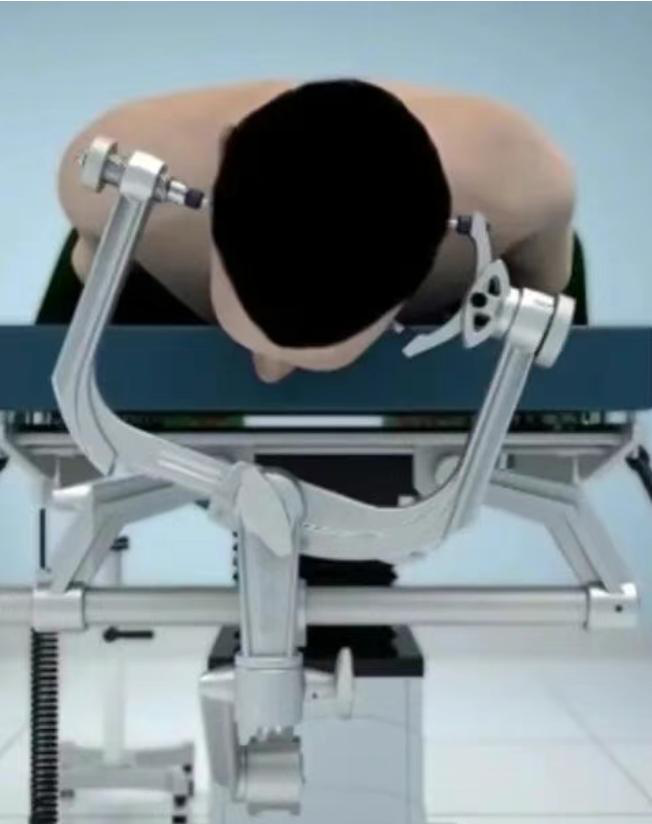
The ball-pivot adaptor and multi-axis adjustment support the full range of neurosurgical positions: supine, prone, lateral (park-bench), semi-sitting and sitting. Intra-operative fine adjustment of the head is possible without loosening the skull pins.
Standard Operating Procedure
- After induction of general anesthesia and endotracheal intubation, the circulating nurse supports the patient's head and neck. The patient is moved cranially so the shoulders align with the upper edge of the operating table. For obese or short-necked patients, the neck may slightly overhang the table edge.
- The patient is placed in the intended surgical position (supine, prone, lateral or sitting) before the head frame is mounted. Multi-person, slow, coordinated movement is required.
- The circulating nurse releases all joints and disc knobs of the head-frame base, opens the sterile skull-pin pack, aligns the base insertion pins with the operating-table side-rail coupling holes and tightens the base fixing screws with the supplied wrench.
- The surgeon, wearing sterile gloves, mounts the three autoclave-sterilized skull pins onto the skull-clamp assembly, attaches the assembly to the C-shaped frame bracket, disinfects the pin-insertion sites with iodophor and connects the bracket to the support-arm connecting rod.
- The surgeon selects the appropriate pin-placement site, gently tightens the joints, screws the skull pins through the scalp onto the outer table of the skull, then slightly loosens the rod-mounted joints to fine-tune the head position for full surgical-field exposure, and finally re-tightens all joints and disc knobs.
- After confirming rigid fixation, the assistant releases support of the patient's head.
Key Skull-Pin Placement Rules
- Place pins on bone of adequate thickness — avoid the squamous part of the temporal bone, the temporalis muscle, the suboccipital muscle group, the area overlying air sinuses, the transverse sinus, the sagittal sinus, pre-existing shunt devices and previous skull defects.
- Keep pins at least 2–3 cm away from the planned scalp incision.
- Place the three pins on different three-dimensional planes; for the three-point device, ensure the vertical plane of the single pin bisects the plane of the double-pin arm.
- Recommended clamping pressure: 60 lb (≈ 270 N) for adults, 40 lb (≈ 180 N) for pediatric patients. Maximum pressure must never exceed 80 lb (≈ 360 N).
- For children under 8 years of age, use pediatric pins and apply the device with caution; a dedicated pediatric headrest is recommended.
Disassembly Procedure
- Rotate the compression knob on the double-pin side counter-clockwise until the pressure indicator reads zero.
- Pull the spring lock and withdraw the extension arm until the extension and fixed arms are fully separated.
- Remove the extension arm and the fixed arm away from the patient's head in turn, then take off the skull pins.
- One operator supports the head clamp, another unscrews the head-clamp / connector interface, supports the connector, releases the base handle, loosens the base fixing screws, withdraws the base and reinstalls the head section of the operating table.
Cleaning, Disinfection & Sterilization
- Wipe blood and disinfectant splashes from the device with a non-corrosive antibacterial agent immediately after use.
- The head-frame base (the part that mounts to the operating table) does not require autoclave sterilization; surface disinfection is sufficient.
- The skull pins and the C-shaped frame bracket must be cleaned, lubricated and sterilized by autoclave after every use.
- Loosen the ball universal shaft and wipe it with an oil-impregnated cloth. Do not spray lubricant into the inner part of the universal shaft — excess grease will make the joint over-flexible and may cause intra-operative loosening.
- Install protective sleeves on the sharp tips of the skull pins before autoclaving to avoid damage to the pin tips and to the sterilization wrap.
- Follow the hospital's central sterile supply department (CSSD) specifications for full reprocessing cycles.
Safety Precautions & Contraindications
- Inspect every component (ratchet, compression knob, pressure indicator, skull pins) for wear, deformation or damage before and after every use. Replace any damaged component immediately.
- Count and record the number of screws before and after every procedure.
- Ensure the base of each skull pin is fully seated in the clamping groove of the skull clamp; the pin tip must engage the outer table of the skull without risk of penetration.
- Ensure all ratchet teeth are fully engaged before locking; partially engaged teeth wear prematurely and may slip intra-operatively.
- Do not use this device on patients with skull defects, recent craniotomy, intracranial shunts or unusually thin cranial bone without specialist assessment.
- Do not exceed 80 lb clamping pressure under any circumstance.
- For children under 8 years of age, use only with specialist clinical justification and with dedicated pediatric pins at 40 lb pressure.
Compatible Accessory System
This head frame is fully compatible with a professional brain retraction system consisting of a head ring, fixation clamp, support rod, snake-shaped flexible retraction arm, brain spatula, vessel retractor, brain-cotton tray, hand rest, adjustment tools and a sterilization box. The retraction system is used to hold brain tissue gently in all craniotomy procedures, fully exposing the surgical field and supporting precise intracranial manipulation by the surgeon.
Frequently Asked Questions (FAQ)
Q1. What is a three-point skull clamp and how is it different from a four-point skull clamp?
A three-point skull clamp uses three skull pins (one single pin on one side, two pins on the opposite arm) to provide rigid cranial fixation. A four-point clamp uses two pins on each side. Three-point clamps are the most widely used configuration in modern neurosurgery because the single-lateral-pin design gives a wider surgical field of view, easier pin placement and simpler intra-operative adjustment while still providing rigid immobilization.
Q2. What pressure should be used for adult and pediatric patients?
The recommended pressure is 60 lb (≈ 270 N) for adults and 40 lb (≈ 180 N) for pediatric patients. The pressure should be further adjusted by the clinician according to the actual clinical situation but must never exceed 80 lb (≈ 360 N).
Q3. Which surgical positions does the system support?
The ball-pivot adaptor and multi-axis adjustment support supine, prone, lateral (park-bench), semi-sitting and full sitting positions — covering essentially every neurosurgical position.
Q4. Is the system compatible with my operating table?
Yes. The base unit has two sliding insertion pins with a center-to-center installation range of 190 mm to 590 mm, covering the side-rail coupling patterns of all major operating-table brands used in tertiary hospitals worldwide.
Q5. Can the same clamp be used for both adult and pediatric patients?
Yes. The skull-clamp head accepts both the three adult pins and the three pediatric pins supplied with the system. For children under 8 years of age, use pediatric pins and apply the device with caution.
Q6. How is the device cleaned and sterilized?
The skull pins and the C-shaped frame bracket are cleaned and autoclave-sterilized after every use. The head-frame base that mounts to the operating table is surface-disinfected only and does not require autoclaving. The ball universal shaft is wiped with an oil-impregnated cloth; lubricant must not be sprayed inside the shaft.
Q7. What skull-pin placement sites must be avoided?
Avoid the squamous part of the temporal bone, the temporalis muscle, the suboccipital muscle group, the area overlying air sinuses, the transverse sinus, the sagittal sinus, pre-existing shunt devices and previous skull defects. Maintain at least 2–3 cm from the planned scalp incision.
Q8. What is the working load of the system?
The skull clamp is engineered to safely support the patient's head (typical cranial load ≤ 5 kg) and to withstand all normal intra-operative repositioning forces. The total system net weight is 5.5 kg.
Q9. Is the device certified to international quality standards?
Yes. The system is manufactured under an ISO 13485 quality management system and is CE marked for the international market.
Q10. Does the system support intra-operative repositioning of the head?
Yes. The ball-pivot adaptor allows 360° pan rotation and the universal regulator allows fine multi-angle adjustment without loosening the skull pins, so the surgeon can fine-tune the head position intra-operatively while maintaining rigid fixation.
Why Choose the Red Sun Medizone Three-Point Skull Clamp System
- Rigid, surgeon-trusted fixation: three-point isosceles-triangle pin geometry with a calibrated pressure indicator — the configuration preferred by neurosurgeons worldwide.
- Universal table compatibility: 190–590 mm adjustable base fits every major operating-table brand.
- Full position coverage: supine, prone, lateral, semi-sitting, sitting — supported by a single ball-pivot adaptor.
- Adult and pediatric in one box: three adult + three pediatric pins included.
- Lightweight, single-operator use: 5.5 kg net weight, compact footprint, a single circulating nurse can install.
- ISO 13485 and CE: manufactured under a certified quality management system.
- Global technical support: backed by Red Sun Medizone's international sales and service network.