Product Overview
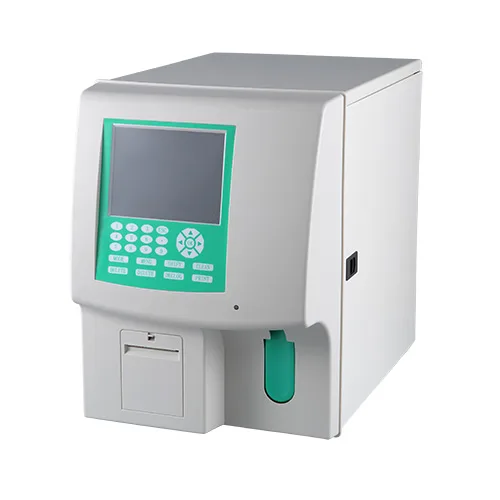
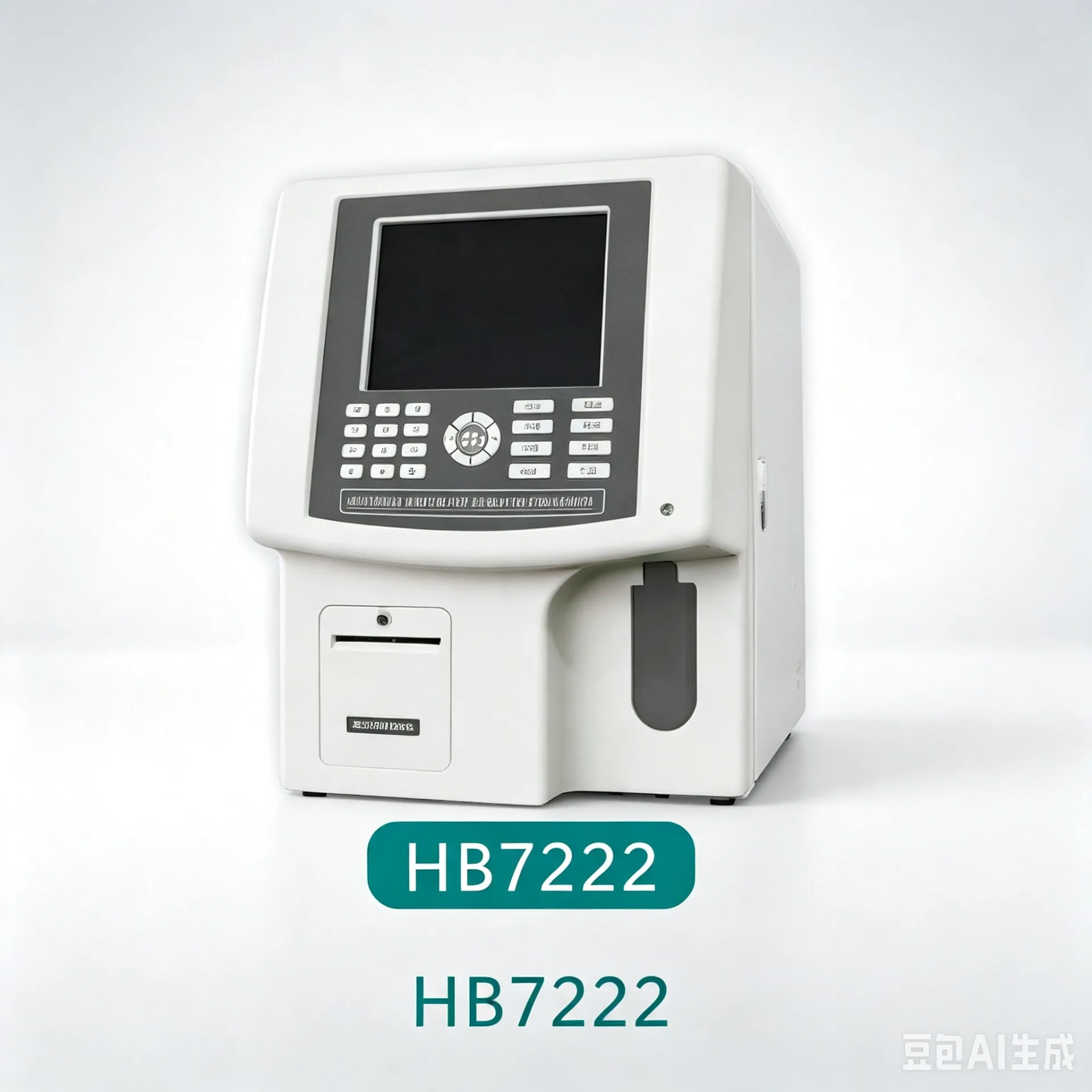
The entry-level fully automatic 3-part differential hematology analyzer developed by Medical, equipped with impedance counting + hemoglobin flow colorimetry dual testing technology. It delivers stable routine CBC detection for primary clinics, physical exam centers and small labs, supporting 19 hematology parameters + 3 cell histograms.
Key Features & Advantages
Two testing modes: Whole blood venous sample mode / Pre-diluted fingertip blood mode Standard workflow: Startup auto-flush → Background blank test → QC testing → Sample analysis → Result review & print → Auto-clean shutdown Complete quality control system: L-J absolute graph & relative graph QC, editable target value & SD for 3 QC levels (Low/Normal/High) Calibration function: Adjustable calibration factor 70%–130% Multi-dimensional data management: Search by sample ID/name/test date, USB export, LIS data upload via RS232 Custom system settings: Reference ranges for male/female/children, editable hospital name, adjustable report templates, LCD brightness, auto standby timer Tiered maintenance: Daily auto cleaning, weekly pipeline & probe maintenance, annual professional engineer service Built-in troubleshooting for common faults: Aperture clog, bubble alarm, reagent shortage, printing failure etc.
Clinical Applications
Community clinics, physical examination institutions, grassroots medical stations, small veterinary labs
Comparison & Competitive Advantages
This product combines competitive pricing with clinical-grade performance. Compared to premium-brand alternatives, it offers equivalent core functionality at a more accessible price point.
Technical Specifications
- Power supply: AC 220V (50±1)Hz, 250V max input
Working environment: 18–35℃, ≤80% RH, 80–106 kPa
Sample Volume
Whole blood: 13 μL
Pre-diluted capillary blood: 20 μL
Reagent Consumption Per Test
Diluent 20mL | Lyse 0.4mL | Detergent 10mL
Performance Indicators
Repeatability (CV): WBC≤2.0%, RBC≤1.5%, HGB≤1.5%, MCV≤0.5%, PLT≤5.0%
Accuracy Tolerance: WBC±4%, RBC±3%, HGB±3%, MCV±3%, PLT±8%
Full linear range for WBC/RBC/HGB/PLT with segmented upper/lower tolerance limits
Testing Principle
Impedance method for WBC, RBC, PLT counting & volume classification by cell size thresholds
540nm flow colorimetry for hemoglobin concentration calculation
Built-in automatic algorithm to compute derived hematological indices (HCT, MCH, MCHC, PCT, LY#/MO#/GR# etc.)
Hardware & Consumables
Front & Rear Structure
Front: LCD display + membrane keyboard, built-in thermal printer, sampling probe, start button, bi-color status indicator (Green=Ready / Red=Running)
Rear: RS232 communication port, PS2 keyboard interface, power input, ground connector, multi reagent tube ports (Diluent/Lyse/Detergent/Waste)
Matching Reagents
Diluent, cyanide-free Lyse, regular detergent, special probe detergent
Core Functions
Two testing modes: Whole blood venous sample mode / Pre-diluted fingertip blood mode
Standard workflow: Startup auto-flush → Background blank test → QC testing → Sample analysis → Result review & print → Auto-clean shutdown
Complete quality control system: L-J absolute graph & relative graph QC, editable target value & SD for 3 QC levels (Low/Normal/High)
Calibration function: Adjustable calibration factor 70%–130%
Multi-dimensional data management: Search by sample ID/name/test date, USB export, LIS data upload via RS232
Custom system settings: Reference ranges for male/female/children, editable hospital name, adjustable report templates, LCD brightness, auto standby timer
Tiered maintenance: Daily auto cleaning, weekly pipeline & probe maintenance, annual professional engineer service
Built-in troubleshooting for common faults: Aperture clog, bubble alarm, reagent shortage, printing failure etc.
Advantages
High testing speed up to 60 samples per hour
Large 200,000-record storage space
Cyanide-free eco-friendly lyse, no toxic pollution
Complete self-clean fluidic system to reduce manual maintenance
Independent histogram alarm for abnormal blood cell morphology (R1/R2/R3/R4/RM/PM flags)
Application Scenarios
Community clinics, physical examination institutions, grassroots medical stations, small veterinary labs
- Dimension: L32×W50×H42 cm | Weight: 23 Kg
Throughput: 60 tests/hour
Storage capacity: 200,000 test records
Service life: 5–8 years
Power supply: AC 220V (50±1)Hz, 250V max input
Working environment: 18–35℃, ≤80% RH, 80–106 kPa
Sample Volume
Whole blood: 13 μL
Pre-diluted capillary blood: 20 μL
Reagent Consumption Per Test
Diluent 20mL | Lyse 0.4mL | Detergent 10mL
Performance Indicators
Repeatability (CV): WBC≤2.0%, RBC≤1.5%, HGB≤1.5%, MCV≤0.5%, PLT≤5.0%
Accuracy Tolerance: WBC±4%, RBC±3%, HGB±3%, MCV±3%, PLT±8%
Full linear range for WBC/RBC/HGB/PLT with segmented upper/lower tolerance limits
Testing Principle
Impedance method for WBC, RBC, PLT counting & volume classification by cell size thresholds
540nm flow colorimetry for hemoglobin concentration calculation
Built-in automatic algorithm to compute derived hematological indices (HCT, MCH, MCHC, PCT, LY#/MO#/GR# etc.)
Hardware & Consumables
Front & Rear Structure
Front: LCD display + membrane keyboard, built-in thermal printer, sampling probe, start button, bi-color status indicator (Green=Ready / Red=Running)
Rear: RS232 communication port, PS2 keyboard interface, power input, ground connector, multi reagent tube ports (Diluent/Lyse/Detergent/Waste)
Matching Reagents
Diluent, cyanide-free Lyse, regular detergent, special probe detergent
Core Functions
Two testing modes: Whole blood venous sample mode / Pre-diluted fingertip blood mode
Standard workflow: Startup auto-flush → Background blank test → QC testing → Sample analysis → Result review & print → Auto-clean shutdown
Complete quality control system: L-J absolute graph & relative graph QC, editable target value & SD for 3 QC levels (Low/Normal/High)
Calibration function: Adjustable calibration factor 70%–130%
Multi-dimensional data management: Search by sample ID/name/test date, USB export, LIS data upload via RS232
Custom system settings: Reference ranges for male/female/children, editable hospital name, adjustable report templates, LCD brightness, auto standby timer
Tiered maintenance: Daily auto cleaning, weekly pipeline & probe maintenance, annual professional engineer service
Built-in troubleshooting for common faults: Aperture clog, bubble alarm, reagent shortage, printing failure etc.
Advantages
High testing speed up to 60 samples per hour
Large 200,000-record storage space
Cyanide-free eco-friendly lyse, no toxic pollution
Complete self-clean fluidic system to reduce manual maintenance
Independent histogram alarm for abnormal blood cell morphology (R1/R2/R3/R4/RM/PM flags)
Application Scenarios
Community clinics, physical examination institutions, grassroots medical stations, small veterinary labs
- Weight: 23 Kg
Throughput: 60 tests/hour
Storage capacity: 200,000 test records
Service life: 5–8 years
Power supply: AC 220V (50±1)Hz, 250V max input
Working environment: 18–35℃, ≤80% RH, 80–106 kPa
Sample Volume
Whole blood: 13 μL
Pre-diluted capillary blood: 20 μL
Reagent Consumption Per Test
Diluent 20mL | Lyse 0.4mL | Detergent 10mL
Performance Indicators
Repeatability (CV): WBC≤2.0%, RBC≤1.5%, HGB≤1.5%, MCV≤0.5%, PLT≤5.0%
Accuracy Tolerance: WBC±4%, RBC±3%, HGB±3%, MCV±3%, PLT±8%
Full linear range for WBC/RBC/HGB/PLT with segmented upper/lower tolerance limits
Testing Principle
Impedance method for WBC, RBC, PLT counting & volume classification by cell size thresholds
540nm flow colorimetry for hemoglobin concentration calculation
Built-in automatic algorithm to compute derived hematological indices (HCT, MCH, MCHC, PCT, LY#/MO#/GR# etc.)
Hardware & Consumables
Front & Rear Structure
Front: LCD display + membrane keyboard, built-in thermal printer, sampling probe, start button, bi-color status indicator (Green=Ready / Red=Running)
Rear: RS232 communication port, PS2 keyboard interface, power input, ground connector, multi reagent tube ports (Diluent/Lyse/Detergent/Waste)
Matching Reagents
Diluent, cyanide-free Lyse, regular detergent, special probe detergent
Core Functions
Two testing modes: Whole blood venous sample mode / Pre-diluted fingertip blood mode
Standard workflow: Startup auto-flush → Background blank test → QC testing → Sample analysis → Result review & print → Auto-clean shutdown
Complete quality control system: L-J absolute graph & relative graph QC, editable target value & SD for 3 QC levels (Low/Normal/High)
Calibration function: Adjustable calibration factor 70%–130%
Multi-dimensional data management: Search by sample ID/name/test date, USB export, LIS data upload via RS232
Custom system settings: Reference ranges for male/female/children, editable hospital name, adjustable report templates, LCD brightness, auto standby timer
Tiered maintenance: Daily auto cleaning, weekly pipeline & probe maintenance, annual professional engineer service
Built-in troubleshooting for common faults: Aperture clog, bubble alarm, reagent shortage, printing failure etc.
Advantages
High testing speed up to 60 samples per hour
Large 200,000-record storage space
Cyanide-free eco-friendly lyse, no toxic pollution
Complete self-clean fluidic system to reduce manual maintenance
Independent histogram alarm for abnormal blood cell morphology (R1/R2/R3/R4/RM/PM flags)
Application Scenarios
Community clinics, physical examination institutions, grassroots medical stations, small veterinary labs
- Throughput: 60 tests/hour
Storage capacity: 200,000 test records
Service life: 5–8 years
Power supply: AC 220V (50±1)Hz, 250V max input
Working environment: 18–35℃, ≤80% RH, 80–106 kPa
Sample Volume
Whole blood: 13 μL
Pre-diluted capillary blood: 20 μL
Reagent Consumption Per Test
Diluent 20mL | Lyse 0.4mL | Detergent 10mL
Performance Indicators
Repeatability (CV): WBC≤2.0%, RBC≤1.5%, HGB≤1.5%, MCV≤0.5%, PLT≤5.0%
Accuracy Tolerance: WBC±4%, RBC±3%, HGB±3%, MCV±3%, PLT±8%
Full linear range for WBC/RBC/HGB/PLT with segmented upper/lower tolerance limits
Testing Principle
Impedance method for WBC, RBC, PLT counting & volume classification by cell size thresholds
540nm flow colorimetry for hemoglobin concentration calculation
Built-in automatic algorithm to compute derived hematological indices (HCT, MCH, MCHC, PCT, LY#/MO#/GR# etc.)
Hardware & Consumables
Front & Rear Structure
Front: LCD display + membrane keyboard, built-in thermal printer, sampling probe, start button, bi-color status indicator (Green=Ready / Red=Running)
Rear: RS232 communication port, PS2 keyboard interface, power input, ground connector, multi reagent tube ports (Diluent/Lyse/Detergent/Waste)
Matching Reagents
Diluent, cyanide-free Lyse, regular detergent, special probe detergent
Core Functions
Two testing modes: Whole blood venous sample mode / Pre-diluted fingertip blood mode
Standard workflow: Startup auto-flush → Background blank test → QC testing → Sample analysis → Result review & print → Auto-clean shutdown
Complete quality control system: L-J absolute graph & relative graph QC, editable target value & SD for 3 QC levels (Low/Normal/High)
Calibration function: Adjustable calibration factor 70%–130%
Multi-dimensional data management: Search by sample ID/name/test date, USB export, LIS data upload via RS232
Custom system settings: Reference ranges for male/female/children, editable hospital name, adjustable report templates, LCD brightness, auto standby timer
Tiered maintenance: Daily auto cleaning, weekly pipeline & probe maintenance, annual professional engineer service
Built-in troubleshooting for common faults: Aperture clog, bubble alarm, reagent shortage, printing failure etc.
Advantages
High testing speed up to 60 samples per hour
Large 200,000-record storage space
Cyanide-free eco-friendly lyse, no toxic pollution
Complete self-clean fluidic system to reduce manual maintenance
Independent histogram alarm for abnormal blood cell morphology (R1/R2/R3/R4/RM/PM flags)
Application Scenarios
Community clinics, physical examination institutions, grassroots medical stations, small veterinary labs
- speed: up to 60 samples per hour
Large 200,000-record storage space
Cyanide-free eco-friendly lyse, no toxic pollution
Complete self-clean fluidic system to reduce manual maintenance
Independent histogram alarm for abnormal blood cell morphology (R1/R2/R3/R4/RM/PM flags)
Application Scenarios
Community clinics, physical examination institutions, grassroots medical stations, small veterinary labs
- Storage: capacity: 200,000 test records
Service life: 5–8 years
Power supply: AC 220V (50±1)Hz, 250V max input
Working environment: 18–35℃, ≤80% RH, 80–106 kPa
Sample Volume
Whole blood: 13 μL
Pre-diluted capillary blood: 20 μL
Reagent Consumption Per Test
Diluent 20mL | Lyse 0.4mL | Detergent 10mL
Performance Indicators
Repeatability (CV): WBC≤2.0%, RBC≤1.5%, HGB≤1.5%, MCV≤0.5%, PLT≤5.0%
Accuracy Tolerance: WBC±4%, RBC±3%, HGB±3%, MCV±3%, PLT±8%
Full linear range for WBC/RBC/HGB/PLT with segmented upper/lower tolerance limits
Testing Principle
Impedance method for WBC, RBC, PLT counting & volume classification by cell size thresholds
540nm flow colorimetry for hemoglobin concentration calculation
Built-in automatic algorithm to compute derived hematological indices (HCT, MCH, MCHC, PCT, LY#/MO#/GR# etc.)
Hardware & Consumables
Front & Rear Structure
Front: LCD display + membrane keyboard, built-in thermal printer, sampling probe, start button, bi-color status indicator (Green=Ready / Red=Running)
Rear: RS232 communication port, PS2 keyboard interface, power input, ground connector, multi reagent tube ports (Diluent/Lyse/Detergent/Waste)
Matching Reagents
Diluent, cyanide-free Lyse, regular detergent, special probe detergent
Core Functions
Two testing modes: Whole blood venous sample mode / Pre-diluted fingertip blood mode
Standard workflow: Startup auto-flush → Background blank test → QC testing → Sample analysis → Result review & print → Auto-clean shutdown
Complete quality control system: L-J absolute graph & relative graph QC, editable target value & SD for 3 QC levels (Low/Normal/High)
Calibration function: Adjustable calibration factor 70%–130%
Multi-dimensional data management: Search by sample ID/name/test date, USB export, LIS data upload via RS232
Custom system settings: Reference ranges for male/female/children, editable hospital name, adjustable report templates, LCD brightness, auto standby timer
Tiered maintenance: Daily auto cleaning, weekly pipeline & probe maintenance, annual professional engineer service
Built-in troubleshooting for common faults: Aperture clog, bubble alarm, reagent shortage, printing failure etc.
Advantages
High testing speed up to 60 samples per hour
Large 200,000-record storage space
Cyanide-free eco-friendly lyse, no toxic pollution
Complete self-clean fluidic system to reduce manual maintenance
Independent histogram alarm for abnormal blood cell morphology (R1/R2/R3/R4/RM/PM flags)
Application Scenarios
Community clinics, physical examination institutions, grassroots medical stations, small veterinary labs
- Sample: Volume
Whole blood: 13 μL
Pre-diluted capillary blood: 20 μL
Reagent Consumption Per Test
Diluent 20mL | Lyse 0.4mL | Detergent 10mL
Performance Indicators
Repeatability (CV): WBC≤2.0%, RBC≤1.5%, HGB≤1.5%, MCV≤0.5%, PLT≤5.0%
Accuracy Tolerance: WBC±4%, RBC±3%, HGB±3%, MCV±3%, PLT±8%
Full linear range for WBC/RBC/HGB/PLT with segmented upper/lower tolerance limits
Testing Principle
Impedance method for WBC, RBC, PLT counting & volume classification by cell size thresholds
540nm flow colorimetry for hemoglobin concentration calculation
Built-in automatic algorithm to compute derived hematological indices (HCT, MCH, MCHC, PCT, LY#/MO#/GR# etc.)
Hardware & Consumables
Front & Rear Structure
Front: LCD display + membrane keyboard, built-in thermal printer, sampling probe, start button, bi-color status indicator (Green=Ready / Red=Running)
Rear: RS232 communication port, PS2 keyboard interface, power input, ground connector, multi reagent tube ports (Diluent/Lyse/Detergent/Waste)
Matching Reagents
Diluent, cyanide-free Lyse, regular detergent, special probe detergent
Core Functions
Two testing modes: Whole blood venous sample mode / Pre-diluted fingertip blood mode
Standard workflow: Startup auto-flush → Background blank test → QC testing → Sample analysis → Result review & print → Auto-clean shutdown
Complete quality control system: L-J absolute graph & relative graph QC, editable target value & SD for 3 QC levels (Low/Normal/High)
Calibration function: Adjustable calibration factor 70%–130%
Multi-dimensional data management: Search by sample ID/name/test date, USB export, LIS data upload via RS232
Custom system settings: Reference ranges for male/female/children, editable hospital name, adjustable report templates, LCD brightness, auto standby timer
Tiered maintenance: Daily auto cleaning, weekly pipeline & probe maintenance, annual professional engineer service
Built-in troubleshooting for common faults: Aperture clog, bubble alarm, reagent shortage, printing failure etc.
Advantages
High testing speed up to 60 samples per hour
Large 200,000-record storage space
Cyanide-free eco-friendly lyse, no toxic pollution
Complete self-clean fluidic system to reduce manual maintenance
Independent histogram alarm for abnormal blood cell morphology (R1/R2/R3/R4/RM/PM flags)
Application Scenarios
Community clinics, physical examination institutions, grassroots medical stations, small veterinary labs
- Accuracy: Tolerance: WBC±4%, RBC±3%, HGB±3%, MCV±3%, PLT±8%
Full linear range for WBC/RBC/HGB/PLT with segmented upper/lower tolerance limits
Testing Principle
Impedance method for WBC, RBC, PLT counting & volume classification by cell size thresholds
540nm flow colorimetry for hemoglobin concentration calculation
Built-in automatic algorithm to compute derived hematological indices (HCT, MCH, MCHC, PCT, LY#/MO#/GR# etc.)
Hardware & Consumables
Front & Rear Structure
Front: LCD display + membrane keyboard, built-in thermal printer, sampling probe, start button, bi-color status indicator (Green=Ready / Red=Running)
Rear: RS232 communication port, PS2 keyboard interface, power input, ground connector, multi reagent tube ports (Diluent/Lyse/Detergent/Waste)
Matching Reagents
Diluent, cyanide-free Lyse, regular detergent, special probe detergent
Core Functions
Two testing modes: Whole blood venous sample mode / Pre-diluted fingertip blood mode
Standard workflow: Startup auto-flush → Background blank test → QC testing → Sample analysis → Result review & print → Auto-clean shutdown
Complete quality control system: L-J absolute graph & relative graph QC, editable target value & SD for 3 QC levels (Low/Normal/High)
Calibration function: Adjustable calibration factor 70%–130%
Multi-dimensional data management: Search by sample ID/name/test date, USB export, LIS data upload via RS232
Custom system settings: Reference ranges for male/female/children, editable hospital name, adjustable report templates, LCD brightness, auto standby timer
Tiered maintenance: Daily auto cleaning, weekly pipeline & probe maintenance, annual professional engineer service
Built-in troubleshooting for common faults: Aperture clog, bubble alarm, reagent shortage, printing failure etc.
Advantages
High testing speed up to 60 samples per hour
Large 200,000-record storage space
Cyanide-free eco-friendly lyse, no toxic pollution
Complete self-clean fluidic system to reduce manual maintenance
Independent histogram alarm for abnormal blood cell morphology (R1/R2/R3/R4/RM/PM flags)
Application Scenarios
Community clinics, physical examination institutions, grassroots medical stations, small veterinary labs
- Storage capacity: 200,000 test records
Service life: 5–8 years
Power supply: AC 220V (50±1)Hz, 250V max input
Working environment: 18–35℃, ≤80% RH, 80–106 kPa
Sample Volume
Whole blood: 13 μL
Pre-diluted capillary blood: 20 μL
Reagent Consumption Per Test
Diluent 20mL | Lyse 0.4mL | Detergent 10mL
Performance Indicators
Repeatability (CV): WBC≤2.0%, RBC≤1.5%, HGB≤1.5%, MCV≤0.5%, PLT≤5.0%
Accuracy Tolerance: WBC±4%, RBC±3%, HGB±3%, MCV±3%, PLT±8%
Full linear range for WBC/RBC/HGB/PLT with segmented upper/lower tolerance limits
Testing Principle
Impedance method for WBC, RBC, PLT counting & volume classification by cell size thresholds
540nm flow colorimetry for hemoglobin concentration calculation
Built-in automatic algorithm to compute derived hematological indices (HCT, MCH, MCHC, PCT, LY#/MO#/GR# etc.)
Hardware & Consumables
Front & Rear Structure
Front: LCD display + membrane keyboard, built-in thermal printer, sampling probe, start button, bi-color status indicator (Green=Ready / Red=Running)
Rear: RS232 communication port, PS2 keyboard interface, power input, ground connector, multi reagent tube ports (Diluent/Lyse/Detergent/Waste)
Matching Reagents
Diluent, cyanide-free Lyse, regular detergent, special probe detergent
Core Functions
Two testing modes: Whole blood venous sample mode / Pre-diluted fingertip blood mode
Standard workflow: Startup auto-flush → Background blank test → QC testing → Sample analysis → Result review & print → Auto-clean shutdown
Complete quality control system: L-J absolute graph & relative graph QC, editable target value & SD for 3 QC levels (Low/Normal/High)
Calibration function: Adjustable calibration factor 70%–130%
Multi-dimensional data management: Search by sample ID/name/test date, USB export, LIS data upload via RS232
Custom system settings: Reference ranges for male/female/children, editable hospital name, adjustable report templates, LCD brightness, auto standby timer
Tiered maintenance: Daily auto cleaning, weekly pipeline & probe maintenance, annual professional engineer service
Built-in troubleshooting for common faults: Aperture clog, bubble alarm, reagent shortage, printing failure etc.
Advantages
High testing speed up to 60 samples per hour
Large 200,000-record storage space
Cyanide-free eco-friendly lyse, no toxic pollution
Complete self-clean fluidic system to reduce manual maintenance
Independent histogram alarm for abnormal blood cell morphology (R1/R2/R3/R4/RM/PM flags)
Application Scenarios
Community clinics, physical examination institutions, grassroots medical stations, small veterinary labs
- communication: port, PS2 keyboard interface, power input, ground connector, multi reagent tube ports (Diluent/Lyse/Detergent/Waste)
Matching Reagents
Diluent, cyanide-free Lyse, regular detergent, special probe detergent
Core Functions
Two testing modes: Whole blood venous sample mode / Pre-diluted fingertip blood mode
Standard workflow: Startup auto-flush → Background blank test → QC testing → Sample analysis → Result review & print → Auto-clean shutdown
Complete quality control system: L-J absolute graph & relative graph QC, editable target value & SD for 3 QC levels (Low/Normal/High)
Calibration function: Adjustable calibration factor 70%–130%
Multi-dimensional data management: Search by sample ID/name/test date, USB export, LIS data upload via RS232
Custom system settings: Reference ranges for male/female/children, editable hospital name, adjustable report templates, LCD brightness, auto standby timer
Tiered maintenance: Daily auto cleaning, weekly pipeline & probe maintenance, annual professional engineer service
Built-in troubleshooting for common faults: Aperture clog, bubble alarm, reagent shortage, printing failure etc.
Advantages
High testing speed up to 60 samples per hour
Large 200,000-record storage space
Cyanide-free eco-friendly lyse, no toxic pollution
Complete self-clean fluidic system to reduce manual maintenance
Independent histogram alarm for abnormal blood cell morphology (R1/R2/R3/R4/RM/PM flags)
Application Scenarios
Community clinics, physical examination institutions, grassroots medical stations, small veterinary labs
Frequently Asked Questions
Q: What are the key features of the HB General Standard Model?
A: The HB General Standard Model is designed with clinical efficiency, safety, and reliability as priorities. Key features include robust construction, user-friendly operation, and compliance with international medical device standards including CE marking and ISO 13485 certification.
Q: What clinical settings is this device suitable for?
A: This device is suitable for hospitals, clinics, and specialized medical facilities. Its design accommodates both high-volume clinical environments and specialized care settings, supporting versatile deployment across different healthcare scenarios.
Q: What certifications does this product have?
A: This product carries CE marking and is manufactured under an ISO 13485 certified quality management system, ensuring compliance with international medical device regulatory requirements.
Q: How does this product compare to alternatives on the market?
A: This product combines competitive pricing with clinical-grade performance. Compared to premium-brand alternatives, it offers equivalent core functionality at a more accessible price point, making it particularly suitable for healthcare facilities seeking cost-effective solutions without compromising on quality.
← Back to all products