Colombia — A leading Colombian hospital has successfully completed the installation, commissioning, and final acceptance of the LEDD700/500 double-head LED surgical operating light, a ceiling-mounted surgical lighting platform engineered for modern operating theaters. The acceptance follows a structured, phased installation program and a full clinical validation protocol carried out in close collaboration with the manufacturer’s service engineering team, and marks the hospital’s most significant operating-room upgrade in more than a decade.
The new system — featuring a 700 mm primary dome paired with a 500 mm auxiliary dome suspended from a single ceiling-mounted rotational arm — replaces the hospital’s previous halogen-based surgical lights and brings high-output, cool-running, color-accurate LED surgical light illumination to one of the facility’s highest-volume operating rooms. Hospital leadership has confirmed that the unit has now passed full clinical acceptance, signed off against the manufacturer’s published specification, and is in active daily use across general surgery, gynecology, orthopedics, trauma surgery, and emergency surgical procedures.
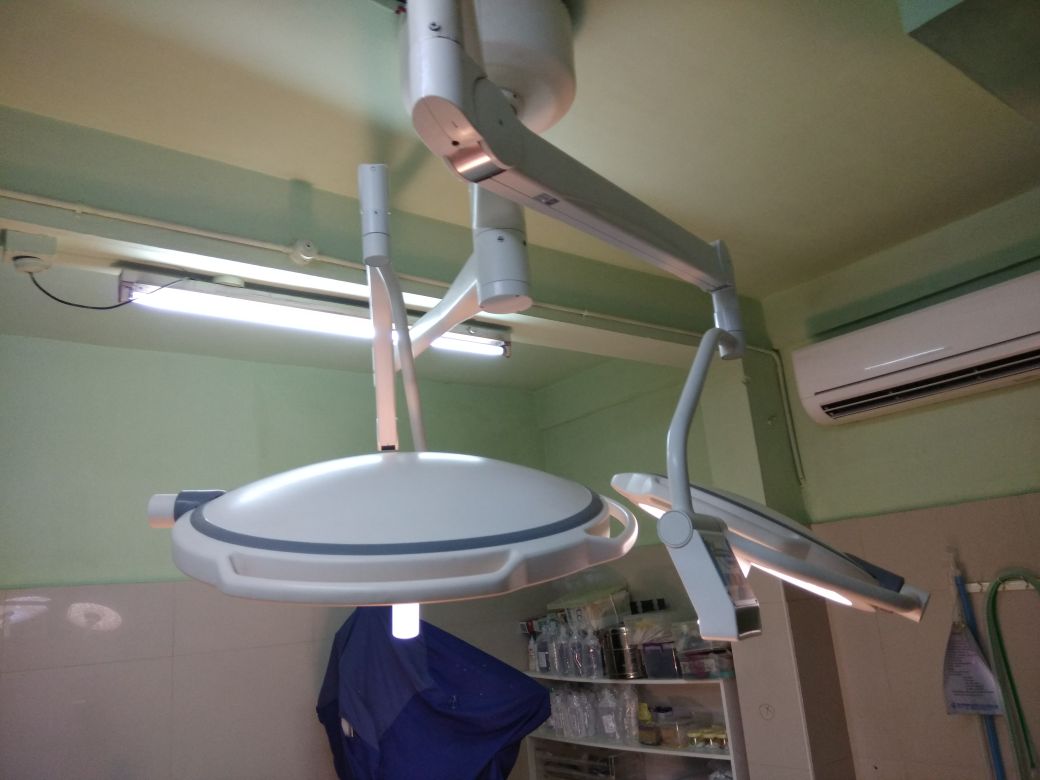
Replacing Legacy Halogen: What the Upgrade Means in Practice
The hospital’s previous surgical lighting had served the institution faithfully for more than twelve years but reflected the limitations of halogen technology that is now widely considered obsolete in modern surgical environments. Compared with the legacy system, the LEDD700/500 delivers a step-change improvement across every clinically significant parameter. The most immediate operational difference cited by the surgical team is heat: halogen surgical lights dump significant infrared energy into the surgical field, drying exposed tissue and contributing to surgeon fatigue during long procedures. The LEDD700/500, by contrast, produces negligible infrared output, keeping both the surgical field and the surgical team measurably cooler.
In operational terms, the upgrade also resolves a long-standing pain point — lamp replacement. The hospital’s previous halogen system required lamp changes approximately every 2,000 hours of use, with each change requiring sterile operating-room downtime. The LEDD700/500’s 50,000-hour service life means the hospital now expects to go more than a decade between lamp replacements, freeing biomedical engineering hours for higher-value equipment maintenance activities across the hospital.
A Modern Lighting Solution for a Modern Operating Room
The LEDD700/500 was selected by the hospital’s surgical committee after a six-month technical evaluation comparing competing dual-dome platforms from international manufacturers operating in the Latin American market. The evaluation criteria included maximum illuminance output, color rendering fidelity, shadow elimination performance, heat emission at the surgical field, energy efficiency, total cost of ownership over a ten-year operating horizon, and the depth of the manufacturer’s after-sales service infrastructure across the Andean region.
“The LEDD700/500 was the strongest performer in every category that matters at the operating table,” said the hospital’s Chief of Surgery. “The combination of very high illuminance, true-to-life tissue color, and a near-shadowless optical design means our surgeons can operate with full visual confidence — particularly in deep-cavity abdominal and orthopedic procedures where the previous halogen lights left us working in poorly defined surgical fields.”
Following contract signing, the manufacturer’s project team coordinated international logistics, site preparation, ceiling structural verification, electrical infrastructure upgrades, and a phased installation plan designed to minimize disruption to the hospital’s surgical schedule. Installation, mechanical alignment, and electrical integration were completed within the agreed timeline, after which the engineering team carried out photometric calibration, sterile-field compatibility verification, and a full clinical dry-run before the formal acceptance ceremony attended by the hospital’s surgical committee, biomedical engineering department, and infection control leadership.
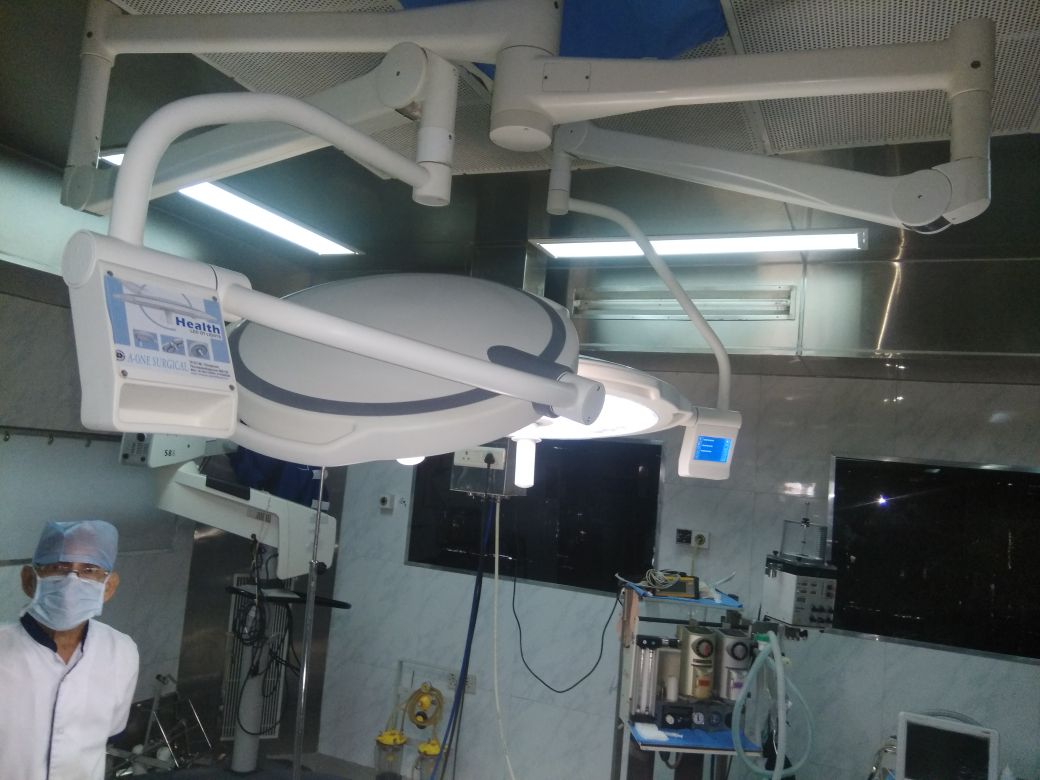
Clinical Performance That Surgeons Notice Immediately
Independent photometric verification at acceptance testing confirmed key performance indicators matching or exceeding the published specifications of the LEDD700/500 double-head LED surgical operating light across both lamp heads:
- High-intensity, shadow-free illumination: 120 high-efficiency LED beads deliver 60,000–160,000 lux with an outstanding 98% shadowless rate, ensuring clear visualisation of deep surgical cavities even in complex multi-clinician scenarios.
- Outstanding color rendering: Tunable 3,500–5,000 K color temperature with CRI Ra 85–95 restores true tissue colour for accurate intraoperative assessment of bleeding, perfusion, and tissue viability.
- Wide adjustable light field: Continuously adjustable light spot diameter from 120 mm to 300 mm supports both fine microsurgical detail work and broad illumination of large operative fields.
- Deep-cavity penetration: A lighting depth of more than 1,400 mm ensures uniform brightness even in deep orthopedic, abdominal, and cardiothoracic procedures.
- Ultra-long LED lifespan: Service life exceeding 50,000 hours translates into more than a decade of reliable use between lamp changes, dramatically lowering total cost of ownership.
- Low power consumption & energy saving: Advanced LED cold-light technology with a heat-to-light ratio below 3.6 mW/m²·lux reduces electricity demand by approximately 80% versus halogen and supports hospital sustainability targets.
- Intuitive LCD touch control: One-touch adjustment of brightness, color temperature, and light field size keeps the focus on the procedure and reduces intraoperative adjustment time.
- Optional HD camera system: Built-in intelligent HD camera with optical zoom, auto iris, and auto white balance supports surgical recording, clinical teaching, and telemedicine.
“The first thing our surgical team noticed was the color of the tissue,” noted the hospital’s Head of Anesthesiology. “We are seeing reds, yellows, and the subtle variations of perfusion in a way that our previous lights simply could not reproduce. That difference is clinically meaningful — it changes how we assess bleeding, ischemia, and tissue viability in real time, and it directly supports better intraoperative decision-making.”
The dual-dome architecture of the LEDD700/500 — a larger 700 mm main dome for primary illumination and a smaller 500 mm auxiliary dome for oblique-angle and shadow-fill lighting — was specifically praised by the orthopedic surgery team, which frequently performs procedures in which the primary surgeon’s body would otherwise cast a shadow across the incision line. The auxiliary dome’s independent positioning and color temperature adjustment gave the surgical team a degree of lighting flexibility they describe as transformational for spinal, joint, and trauma procedures.
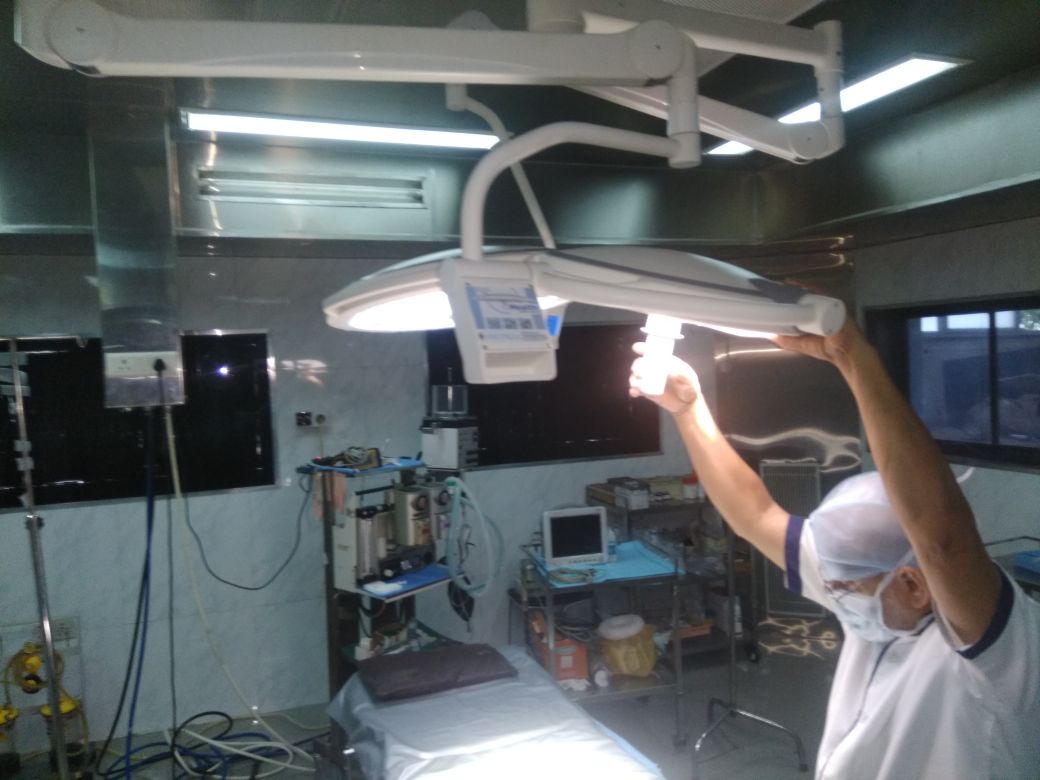
Beyond Lighting: A Strategic Upgrade for the Hospital
Beyond immediate clinical benefits, hospital administrators have framed the LEDD700/500 installation as a strategic investment in the institution’s broader operating-room modernization program. Key qualitative benefits cited by hospital leadership include:
- Surgical throughput: Improved visualization supports faster, more confident tissue dissection and hemostasis, with the surgical team reporting shorter mean operative times for general surgery and gynecological procedures in the weeks following acceptance.
- Energy and sustainability gains: Significantly lower power consumption versus the legacy halogen system aligns with the hospital’s corporate sustainability targets and reduces HVAC load in the operating theater.
- Sterile environment compatibility: The fully enclosed, smooth lamp housing without airflow dead zones simplifies cleaning and complies with laminar flow purification and high-temperature disinfection standards.
- Patient safety: Cold-light LED operation eliminates infrared heat over the surgical field, reducing drying of exposed tissue and supporting improved wound healing outcomes.
- Equipment longevity: With a 50,000-hour LED service life, the hospital anticipates more than a decade of maintenance-free operation before any lamp replacement is required, with corresponding savings on consumables, maintenance labor, and operating-room downtime.
- Brand and reputation: The investment reinforces the hospital’s positioning as a regional reference center for advanced surgical care, supporting both patient attraction and the recruitment of senior surgical specialists who expect modern infrastructure.
“This upgrade is more than a lighting change — it is a statement about where this hospital is going,” the hospital’s Medical Director commented. “Our surgeons now operate under lighting conditions that match the best hospitals in Latin America, and our patients benefit from that standard every day. The LEDD700/500 platform also gives us a clear upgrade path: as we modernize additional operating theaters over the coming years, we can standardize on this architecture across the hospital.”
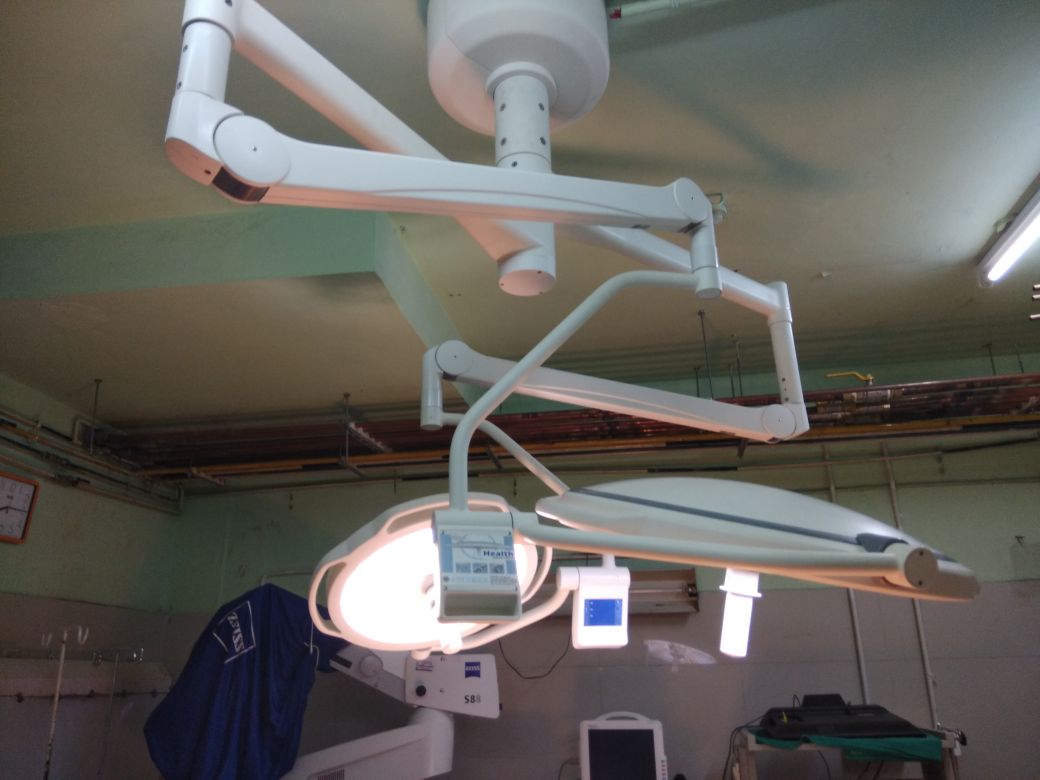
Manufacturer Service, Training and Long-Term Support
As part of the acceptance program, the manufacturer’s clinical applications team delivered on-site training for surgeons, anesthesiologists, operating room nurses, and biomedical engineering staff. Training covered daily operation, illuminance and color temperature adjustment for different surgical specialties, aseptic cleaning protocols for the sealed dome housings, basic preventive maintenance, and a full troubleshooting walkthrough.
A multi-year service agreement has been put in place, including scheduled preventive maintenance visits, a guaranteed 48-hour on-site response commitment for critical issues, guaranteed availability of spare parts through the manufacturer’s Latin America regional distribution center, and direct access to the manufacturer’s Latin America regional service desk in both Spanish and English.
“The training and service commitment mattered as much to us as the hardware itself,” the hospital’s Biomedical Engineering Manager noted. “A surgical light is mission-critical equipment. Knowing that the manufacturer’s engineers are available to us within 48 hours, in our language, with parts on the ground in the region — that is what makes an international platform workable for a hospital in Colombia.”
Early Clinical Signals and Operational Impact
In the weeks following formal acceptance, the surgical leadership team has begun tracking several operational indicators to quantify the impact of the upgrade. Early internal data — to be confirmed over a longer observational window — suggests measurable reductions in mean operative time for selected general surgery and gynecology procedures, lower observed rates of perceived intraoperative visual fatigue among surgeons performing longer cases, and consistent illuminance performance across both lamp heads without the calibration drift that the legacy halogen system exhibited over time. The hospital has indicated that it will publish a fuller internal review of these metrics after six months of accumulated clinical experience.
The hospital’s Quality and Patient Safety Office has also noted that the enhanced tissue color rendering of the LED system is supporting more consistent intraoperative photography for clinical documentation, teaching, and medico-legal records — a benefit the team sees as particularly valuable as the hospital continues to expand its surgical residency and continuing medical education programs.
About the LEDD700/500: The LEDD700/500 is a double-head LED surgical operating light designed for complex surgical procedures, including orthopedic, abdominal, cardiothoracic, general, vascular, gynecological, and emergency trauma surgery. Its cold-light LED source, 98% shadowless rate, 60,000–160,000 lux output, tunable 3,500–5,000 K color temperature, and 50,000-hour LED lifespan make it a leading choice for modern hospital operating rooms, ambulatory surgery centers, and specialty surgical environments worldwide.